
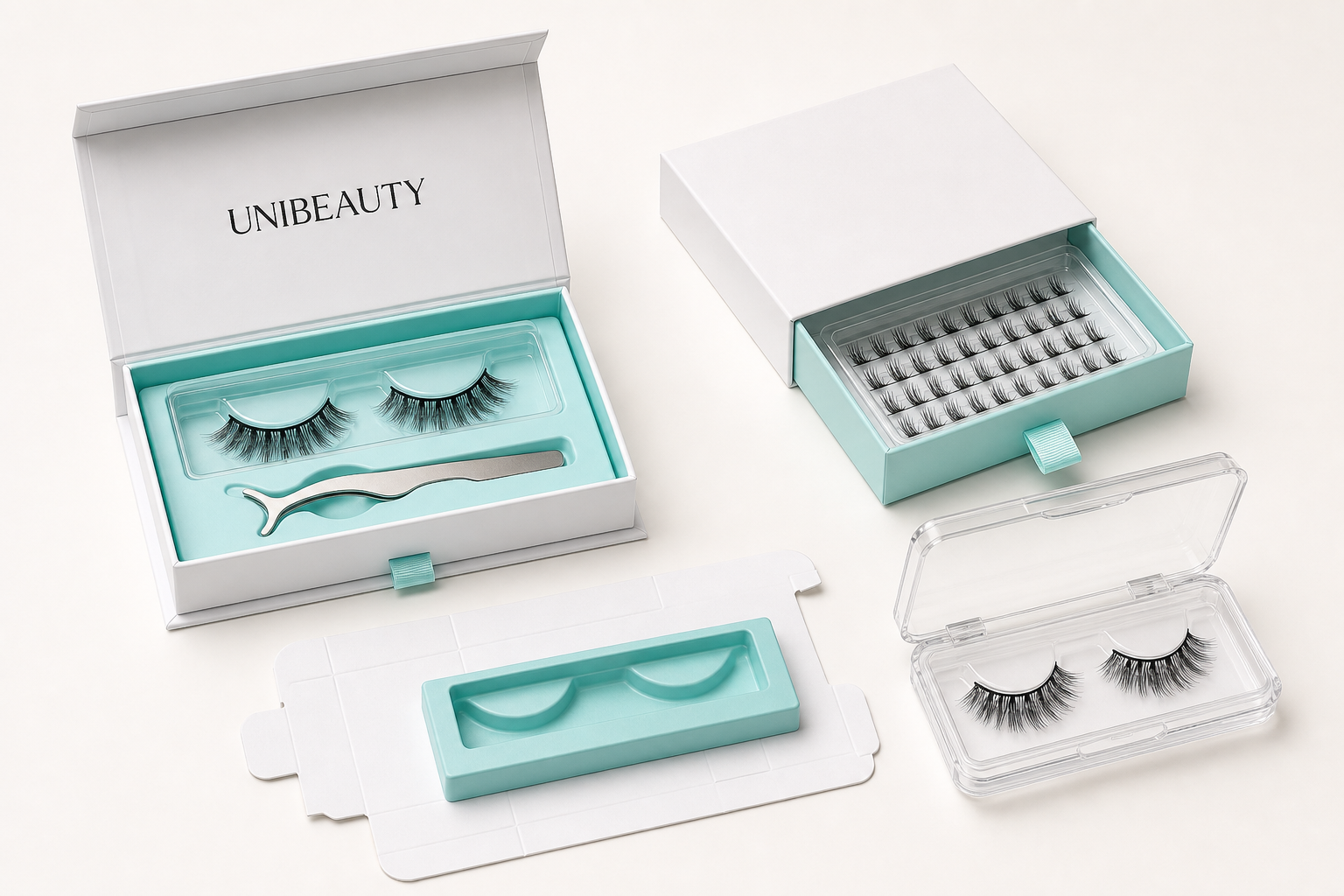
Define the commercial job of the range
Begin with the customer already served by the beauty brand, the primary launch channel and the role lashes should play in the portfolio. A prestige eye extension, an everyday checkout product, a creator-led DIY kit and a professional education range require different product, packaging and replenishment logic. Write one launch objective before selecting styles.
- Primary buyer and use occasion
- Sales channel and merchandising context
- Category role inside the existing portfolio
- Target price architecture
- Launch decision the range must prove
Choose the product system before the style count
Decide whether the customer is buying a complete strip, a DIY cluster system, a pre-glued format, a soft magnetic system or a professional extension program. Each system changes the application explanation, component set, packaging footprint and reorder behavior. Mixing formats can be appropriate, but each added system should solve a distinct customer or channel need rather than make the first range appear larger.
- Product format and application route
- Complete product, kit, refill or professional tray
- Required tool, liquid and instruction components
- Customer learning requirement
- Reason the format belongs in the launch
Give every planned SKU a non-overlapping role
Assign a specific range role before approving a product code. A hero product can express the brand's distinctive point of view; core products can cover the most important everyday outcomes; an expressive option can create a visibly different occasion; a refill or accessory can support the product system. If two proposed products serve the same buyer, effect, application route and price role, they may be duplicate choices rather than useful assortment depth.
- Hero or signature product
- Core everyday option
- Clearly different effect or occasion
- Kit, refill or attachment product
- Planned extension rather than launch duplicate
Build a visible assortment matrix
Compare the planned products in one matrix using buyer-readable differences and manufacturing fields. Style names such as natural, wispy or volume are starting labels, not specifications. Record the intended effect, density, map, curl and length direction, root or band construction, application behavior, pack format and approved physical reference. The matrix should reveal both unexplained gaps and products that are too similar to justify separate codes.
- Buyer and range role
- Visual effect and occasion
- Material and structure direction
- Application and handling behavior
- Pack format and approved sample reference
Make packaging help customers navigate
One packaging system can create recognition across the range while color, naming, imagery and hierarchy help customers understand what changes from one product to the next. Confirm the tray, product code, style name, length or map notation, kit contents, insert, label and artwork version together. Packaging should reduce choice friction and fulfillment error, not hide a weak product distinction behind multiple designs.
- Shared brand architecture
- Readable product and style naming
- Visible effect or application cue
- Accurate component and pack count
- Controlled artwork and label version
Stage additions through decision gates
Separate the products required to explain the first range from ideas that can wait for observed customer, channel and reorder evidence. Expansion can add a new effect, refill, multipack, tool, treatment or cross-category set when it has a defined commercial role and an approved manufacturing route. No universal launch count or expansion calendar applies across brands; quantity, timing and scope are confirmed for the actual program.
- Launch range with complete roles
- Sample and commercial review gate
- Reorder and channel feedback
- Defined reason for each extension
- Approved product, packaging and supply route
Keep the range controllable after launch
A scalable assortment needs more than customer-facing names. Retain the SKU code, product specification, approved sample, component list, artwork version, quality checkpoints and controlled changes for every active product. When a style is extended, revised or sourced through a second route, the record should show what remains shared and what requires a new approval.
- Unique SKU and version identity
- Approved physical and written reference
- Product-to-pack component record
- Change and deviation history
- Repeat-order and source-specific control
Buyer questions
How many eyelash styles should a beauty brand launch with?
There is no universal number. The range should be large enough to express the category and small enough that every product has a distinct buyer, effect, application or price role. Final style count also depends on format, packaging components, channel and project-specific commercial terms.
Should every lash look become a separate SKU?
No. Create a separate SKU when the product serves a clear customer or commercial role and can be explained, manufactured, packed and reordered as a controlled version. Minor variations can remain options within the appropriate product program.
Can one packaging system support several lash styles?
Potentially. A shared packaging architecture can strengthen range recognition, but every product still needs accurate tray fit, naming, notation, component count, artwork and label control. Feasibility and minimums are confirmed for the selected components.
When should a lash brand expand its range?
Expand when a new product has a defined role, evidence from the brand's channel or customers and an approved manufacturing and packaging route. A trend label alone is not enough reason to add another product code.
Related UNIBEAUTY capability pages
These official pages document the wider product-development, manufacturing and packaging model behind this guide.