Define the product role before the technical fields
Start with the buyer, channel, product format and intended use. A retail strip lash, DIY cluster kit and professional extension tray require different construction and review fields. The specification should identify the commercial role without turning a marketing phrase into an untestable technical claim.
- Target customer and market
- Retail, professional or distributor channel
- Strip, cluster, extension, magnetic or treatment format
- Intended look and application route
- Hero product, refill or supporting SKU
Write material and fiber direction as a testable target
Material language should connect a desired result to a comparison method. Record the applicable fiber or material direction, color, surface finish, softness, flexibility, resilience, curl response and thickness or diameter direction. Where an exact value or material has not been approved, mark it as a development target rather than presenting it as a finished specification.
- Material or fiber family
- Color and matte or gloss direction
- Softness and flexibility reference
- Resilience and shape return
- Curl response
- Thickness or diameter where applicable
Translate the visual style into physical construction
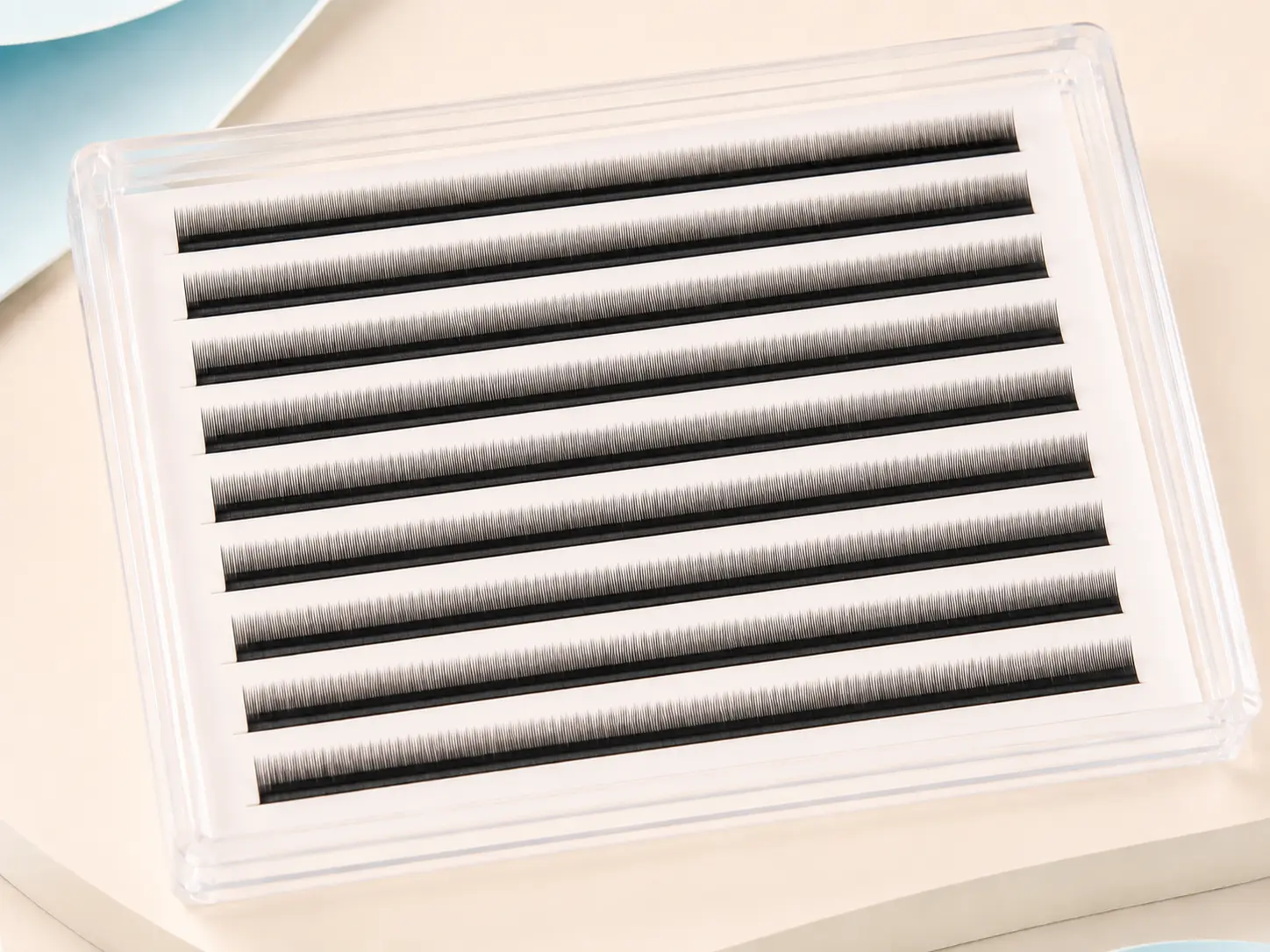
A photograph helps communicate the look, but the specification must explain how the product creates it. Use only the fields that apply to the chosen format. Strip lashes may need eye shape, length progression, density, curl and band direction. DIY clusters may need segment width, length map, spike pattern, base and pickup behavior. Professional extensions may need curl, length, thickness, fan density, root or stem, strip and tray labeling.
- Length range and progression
- Curl and visible lift
- Density, layering and spacing
- Root, stem, band or segment base
- Map, spike or fan structure
- Pair, tray or row presentation
Define use behavior under one review condition
Appearance and handling should be reviewed separately. State the intended tool, application sequence and comparison condition, then record pickup, release, placement, flexibility, return and visible result. Comfort and wear language remains a project target until the complete product and application system have been physically evaluated.
- Pickup and release
- Placement and adjustment
- Band or segment flexibility
- Root or fan stability
- Application sequence and compatible components
- Visible result after application
Connect the lash to its packaging and label
The controlled product includes the tray, card, box, label, insert, instructions and any liquid or tool in the kit. The specification should connect the actual lash version to the correct component list, tray map, artwork file and pack-out so a correct product is not delivered in the wrong commercial presentation.
- Tray layout and product count
- Style, length and curl labeling
- Kit component list
- Instructions and required warnings
- Artwork, barcode and version
- Inner and export pack-out
Build one approval reference, not a folder of clues
The final control reference should combine the approved physical sample with a readable specification, controlled photographs, packaging and artwork versions, approved deviations and open tolerances. Every record needs a product code and version so the factory, buyer, QC team and reorder team are comparing the same product.
- Approved physical sample
- Product specification version
- Controlled comparison images
- Packaging and artwork version
- Approved deviations or open tolerances
- Product code, reviewer and approval date
Separate fixed requirements from development choices
Mark each important field as must match, may adjust or manufacturer to propose. This gives the development team room to solve open questions without weakening the attributes that define the product. Final measurements, tolerances, quantities, timing, testing and documents are confirmed for the specific product, factory route and destination market.
- Must match: defining product attributes
- May adjust: controlled optimization range
- Manufacturer to propose: unresolved technical route
- Buyer to verify: channel and market requirements
- Project confirmation: quantity, timing, testing and documents
Buyer questions
What belongs in a custom eyelash specification sheet?
Include the product role, applicable material and fiber direction, length, curl, thickness, density, map, root or band, handling behavior, tray and packaging components, labels, approved sample, version and project-specific acceptance points.
Can a visual reference photo replace a lash specification?
No. A photo can show the intended look, but it does not fully identify material feel, curl response, thickness, density, root or band construction, pickup behavior, packaging or the approved production version.
Must every tolerance be fixed before the first sample?
Not necessarily. The first comparison samples can establish feasibility and reveal which attributes need measurable limits. Critical tolerances should be agreed before production approval, while subjective targets should retain a controlled physical reference.
Can one specification sheet cover strips, clusters and professional extensions?
Use one common commercial cover sheet, then a format-specific product section. The shared project context can remain consistent, but the construction, handling and QC fields must match the actual lash format.
Related UNIBEAUTY capability pages
These official pages document the wider product-development, manufacturing and packaging model behind this guide.