Put every manufacturer on the same brief
Start with one controlled request for quotation. Give each manufacturer the same product format, target market, specification version, estimated quantity by item, packaging scope, destination and required decision date. If one supplier quotes a stock strip lash and another quotes a developed fiber-and-structure program, the two unit prices are not answering the same request.
- Product family and specification version
- Quantity by style, length, curl or kit where applicable
- Existing, adjusted or bespoke development route
- Packaging and component scope
- Destination and requested delivery basis
Separate development costs from repeat production
A useful quotation distinguishes the work required to create and approve the product from the cost of producing the approved version again. Sampling rounds, engineering work, artwork preparation, print setup, molds or tooling may be one-time, reusable, refundable, buyer-owned or supplier-owned depending on the written agreement. Record the treatment of each item instead of spreading every cost into one unexplained unit price.
- Sample and revision scope
- Product or process development
- Artwork and print setup
- Mold, tooling or custom component development
- Conditions for reuse, refund, ownership or replacement
Compare the physical product and QC scope
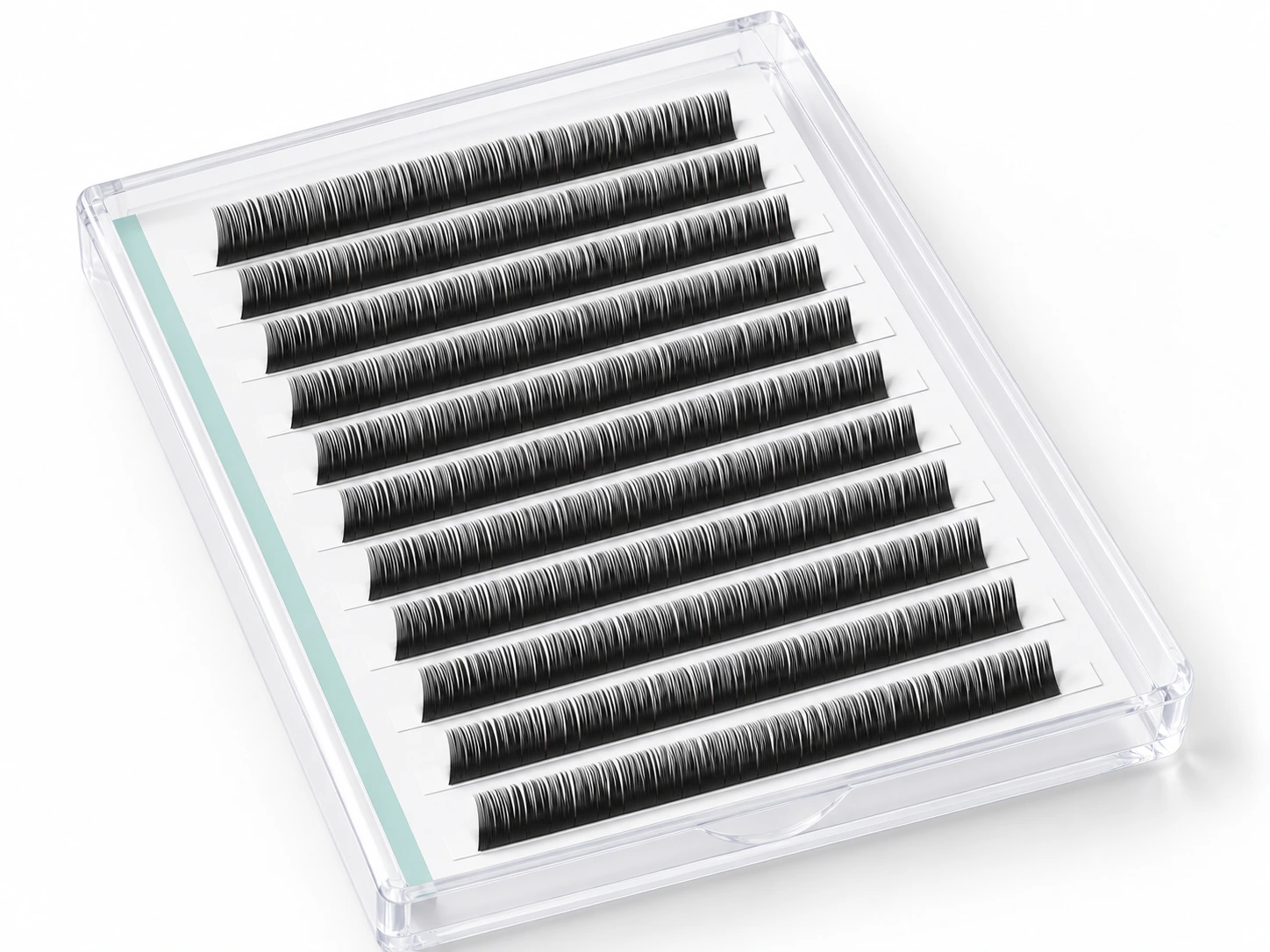
The quoted lash must be tied to an approved reference and product-specific inspection scope. For strip lashes, compare material, map, density, band, pair presentation and packaging. For DIY clusters, compare segment structure, pickup, tray layout and kit components. For professional extensions, compare curl, thickness, root or stem, strip release, tray labeling and pack-out. Generic words such as premium or high quality do not establish equivalent scope.
- Approved physical sample or controlled reference
- Material and construction fields
- Handling or application checkpoints
- Inspection stage and acceptance record
- Treatment of deviations, rework and replacement
Break packaging into real components
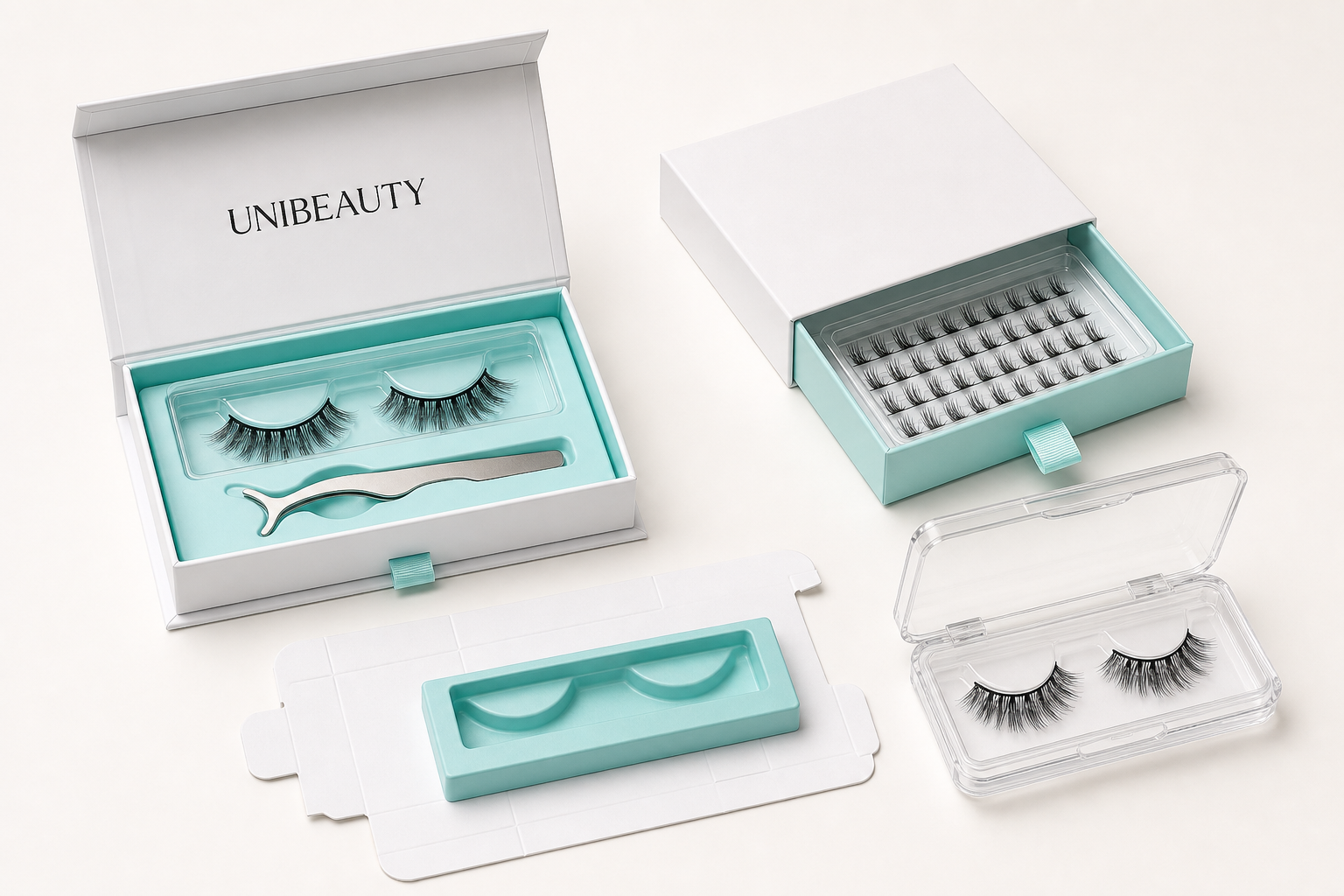
Custom packaging is not one line item. Compare the product tray or card, primary box, label, insert, instructions, barcode, kit assembly and export carton separately. Confirm which artwork version is quoted, whether a stock structure or custom structure is assumed, how print or tooling minimums apply and what happens to unused branded components after the order.
- Tray, card and product count
- Box structure, material and print route
- Labels, inserts, instructions and barcode
- Kit assembly and export pack-out
- Remaining component inventory and reorder use
Read MOQ at the correct level
A stated minimum can apply to the total order, one product family, each style, each length or curl, each packaging design, a printed component or a custom material run. Ask the manufacturer to show the minimum and price tier beside the exact item it controls. Final quantities remain project-specific because lash construction, customization depth and packaging components do not share one universal production minimum.
- Total program quantity
- Minimum by product or specification
- Minimum by branded packaging component
- Quantity tier and unit-price basis
- Effect of mixed styles, lengths, curls or pack formats
Align the delivery and payment basis
Compare the same named trade term, named place and shipment assumptions. A product-only factory price, an export handoff price and a delivered estimate allocate freight, insurance, customs activity, duties, taxes and risk differently. The quotation should also state currency, validity, payment milestones, production-release conditions and whether freight is an estimate or confirmed booking. Import and market requirements must be verified for the destination with the appropriate logistics, customs and regulatory professionals.
- Named trade term and named place
- Freight mode and quoted shipment scope
- Duties, taxes, clearance and insurance responsibilities
- Currency, quote validity and payment milestones
- Conditions that release sampling, printing and production
Compare ownership, change control and reorders
The best first-order price can become a weak long-term choice if the approved product cannot be identified or repeated. Confirm who retains the physical sample, specification, artwork, tooling record and approved deviations; how a material or component change is communicated; and what information will be carried into the next order. Manufacturing labels such as OEM or ODM do not automatically decide ownership or exclusivity.
- Approved sample and specification retention
- Artwork, tooling and supplied-reference rights
- Confidentiality and exclusivity terms
- Change-notification and approval route
- Repeat-order product, component and QC record
Score the complete commercial fit
Compare each offer across product equivalence, development capability, packaging completeness, quality evidence, delivery responsibility and repeat-order control before reviewing the final commercial total. The lowest offer is not automatically wrong, and the highest is not automatically better. The decision is stronger when every included item, excluded item, open assumption and approval responsibility is visible.
- Equivalent product and specification
- Included, excluded and optional work
- Evidence available before commitment
- Total project and replenishment implications
- Open questions, owner and next approval step
Buyer questions
Why can two private-label lash unit prices be very different?
They may describe different lash materials, structures, quantities, packaging components, development work, inspection scope or delivery responsibilities. Normalize those fields before treating the difference as a price advantage.
Should a buyer choose the lowest custom eyelash quotation?
Not from unit price alone. First confirm that the product, sample, packaging, QC, shipment basis and repeat-order records are equivalent. Then compare the complete commercial offer and the risks that remain open.
What should a beauty brand send to receive a meaningful quotation?
Send the target market and channel, product format, manufacturing-ready specification or clear development brief, quantity by version, packaging component list, destination, requested trade basis and the decisions that still require sampling.
Can UNIBEAUTY publish one fixed price or MOQ for every custom lash program?
The current commercial starting quantity and flexible allocation options are shown on the Request Samples and Manufacturing pages, but the exact allocation and price cannot be universal. Product construction, style and specification mix, packaging, tooling, testing, documentation and delivery scope are itemized against the requested project.
Related UNIBEAUTY capability pages
These official pages document the wider product-development, manufacturing and packaging model behind this guide.