Treat MOQ as a map, not one number
Ask what the quoted minimum controls. It may apply to the complete order, one product family, one construction, one style, one length or curl, one printed artwork, one component or one material run. Put the minimum beside the exact item and version it governs. A single headline quantity without that scope cannot show whether the planned assortment is actually producible and packable.
- Controlling product, process or component
- Unit of measure and pack definition
- Minimum by shared or unique specification
- Quantity tier and commercial basis
- Items that can or cannot be combined
Build the quantity plan from the finished product backwards
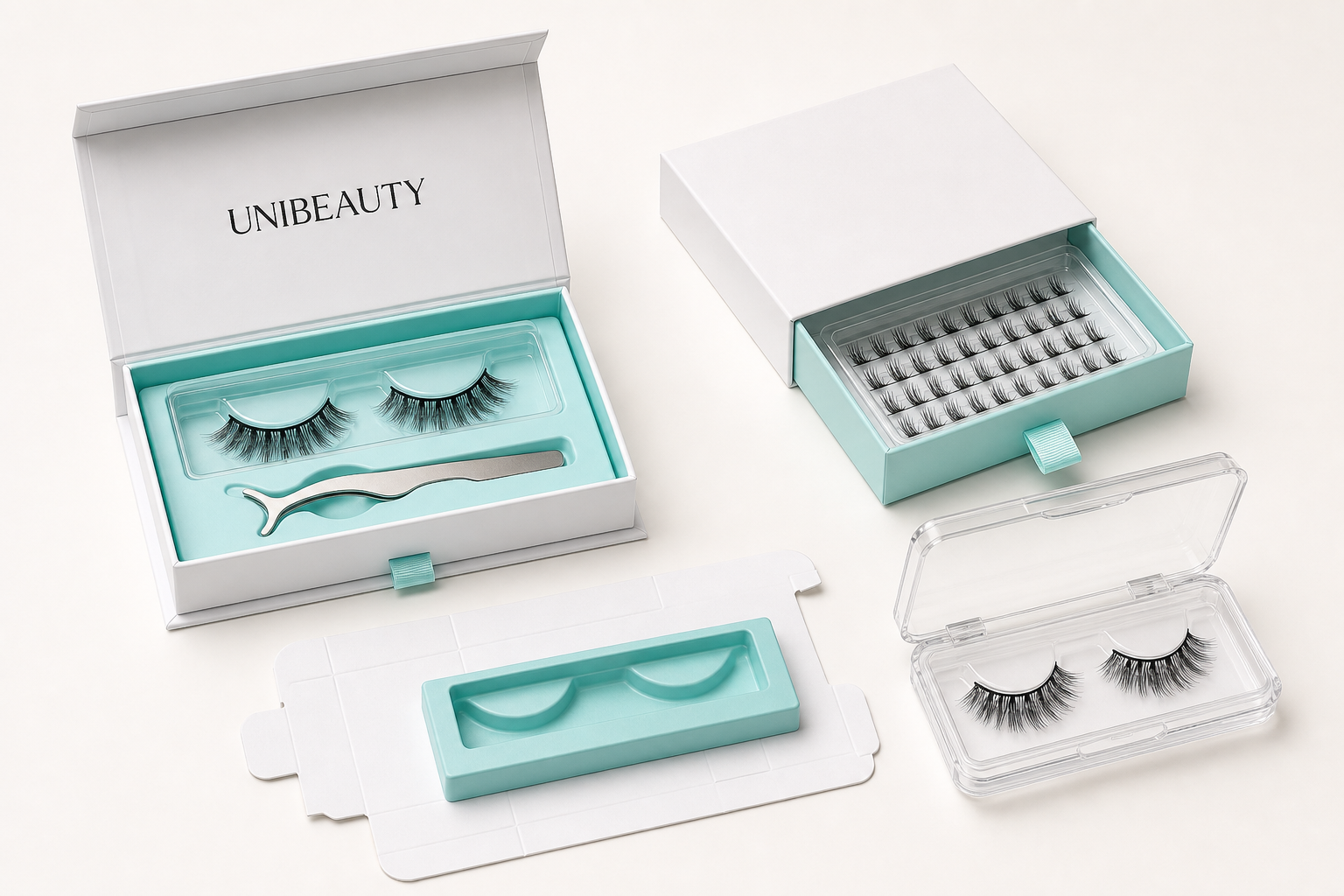
List what the customer will receive, then break it into the physical items required to create and pack it. A strip-lash pair, cluster refill, professional tray, pre-glued format or magnetic kit can contain different lashes, trays, labels, tools, liquids, instructions and boxes. Mark which components are shared across the range and which change by SKU before asking for a total program minimum.
- Finished SKU and pack count
- Lash product and approved specification
- Tray, card, label and primary box
- Liquid, tool or applicator where included
- Insert, instructions and export pack-out
Separate product minimums from specification breadth
The number of finished units does not by itself show manufacturing complexity. Changing material, curl, thickness, density, map, band, root, adhesive base or tray configuration can create a separate production or approval route. Ask which variations can share a run and which require distinct setup, sampling or control. Final answers remain product- and factory-route-specific.
- Shared product construction
- Style or map variation
- Length, curl, thickness and density mix
- Custom material or process direction
- Separate approval and production versions
Plan packaging minimums as separate component decisions
The tray, printed box, label, insert, instruction card and export carton may not share the lash product minimum. A common branded box with accurate SKU labels can follow different quantity logic from unique artwork for every style, while a custom formed tray or rigid structure can introduce another decision. Approve physical fit and stable copy before committing printed inventory.
- Shared versus SKU-specific artwork
- Stock, adjusted or custom structure
- Print, finish and setup route
- Product-to-tray and component fit
- Ownership and use of remaining printed stock
Make every kit component reconcile
A DIY, pre-glued, magnetic or professional starter kit must be planned at both component level and finished-kit level. The lash tray, application product, remover, applicator, tool, insert and box may arrive from different qualified routes or follow different production minimums. The feasible kit count is constrained by the approved components available for the same version—not by the lowest individual minimum shown in a catalog.
- Approved bill of materials
- Minimum and available quantity by component
- Compatible version and labeling
- Assembly, count and pack-out route
- Replacement and reorder responsibility
Balance assortment breadth with controllable depth
Every additional product system, specification, artwork or kit variation can divide the order into smaller pools that must still meet their own conditions. Keep a style when it has a distinct buyer, outcome, price or channel role; consolidate it when it duplicates another offer. The goal is not the fewest SKUs or the largest order, but a range in which every quantity supports a clear commercial job and a controlled manufacturing version.
- Hero, core, expressive and refill roles
- Shared components across compatible SKUs
- Unique attributes customers can understand
- Quantity by planned sales role
- Deferred extensions with a defined gate
Choose customization depth before negotiating quantity
An existing structure with controlled branding, an adjusted product and a bespoke material or construction route do not ask the factory to perform the same work. Decide which attributes create genuine customer value and which can remain shared. Negotiating a lower headline minimum before the development depth is clear can change the product being quoted rather than improve the same offer.
- Existing, adjusted or bespoke starting point
- Customer-visible differentiation
- Sampling and development work
- Custom material, structure or tooling decision
- Approved scope behind the quoted quantity
Design the reorder route with the first order
Record what can be reordered independently, which components are shared, which branded stock remains, how a specification or artwork change affects unused inventory and what evidence identifies the accepted production version. A first-order MOQ that cannot be reconstructed at replenishment is not a complete supply plan. Forecasts and reserve decisions remain the buyer's commercial responsibility and should be reviewed against real channel information.
- Reorderable product and component units
- Remaining branded or custom inventory
- Approved sample, specification and artwork version
- Change-notification and obsolete-stock route
- Lead-time and quantity confirmation for the actual reorder
Send one quantity brief for a usable quotation
Provide the product system, SKU matrix, estimated quantity by version, pack definition, shared and unique packaging, kit bill of materials, destination and expected launch and replenishment roles. Ask the manufacturer to return minimums, price tiers, included work, excluded work and open assumptions against the same rows. This turns MOQ from a marketing claim into a project-specific procurement decision.
- Quantity by product and specification
- Quantity by packaging artwork or component
- Complete-kit and component reconciliation
- Development and production scope
- Open feasibility questions and decision owner
Buyer questions
What is the MOQ for custom eyelashes?
UNIBEAUTY's starting MOQ is 500 boxes total across mixed styles—not 500 boxes per style. The quotation records the quantity for each style, packaging, kit contents and customization scope. Any separate requirements for bespoke tooling, materials or packaging components are listed separately.
Can different lash styles be combined to meet one MOQ?
Yes. Different approved lash styles can be combined to reach the 500-box total; each style does not need an order of 500 boxes. Share the planned style mix and quantities. Separate bespoke tooling, material or packaging-component requirements are confirmed independently in the quotation.
Is the packaging MOQ the same as the lash product MOQ?
Not necessarily. Trays, boxes, labels, inserts, instructions and custom structures can follow separate minimums and setup requirements. Plan them as linked components of the finished SKU rather than assuming one product quantity controls everything.
Does the lowest MOQ create the lowest-risk launch?
Not automatically. A lower quantity may describe a different product, customization depth, packaging route or commercial scope. Compare the complete approved product, component plan, unit basis and reorder route before judging the risk.
Related UNIBEAUTY capability pages
These official pages document the wider product-development, manufacturing and packaging model behind this guide.