 UNIBEAUTY LASHMANUFACTURING
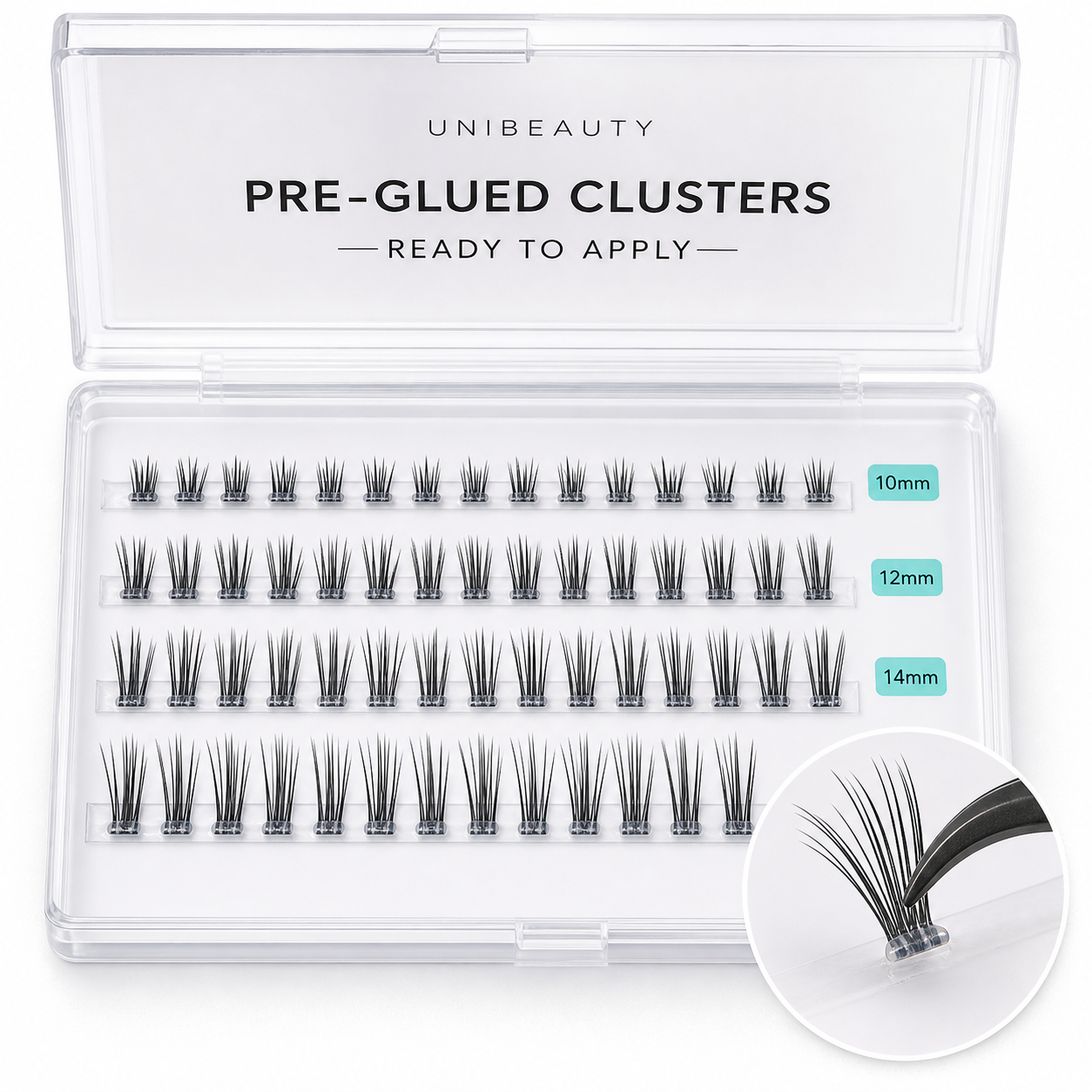
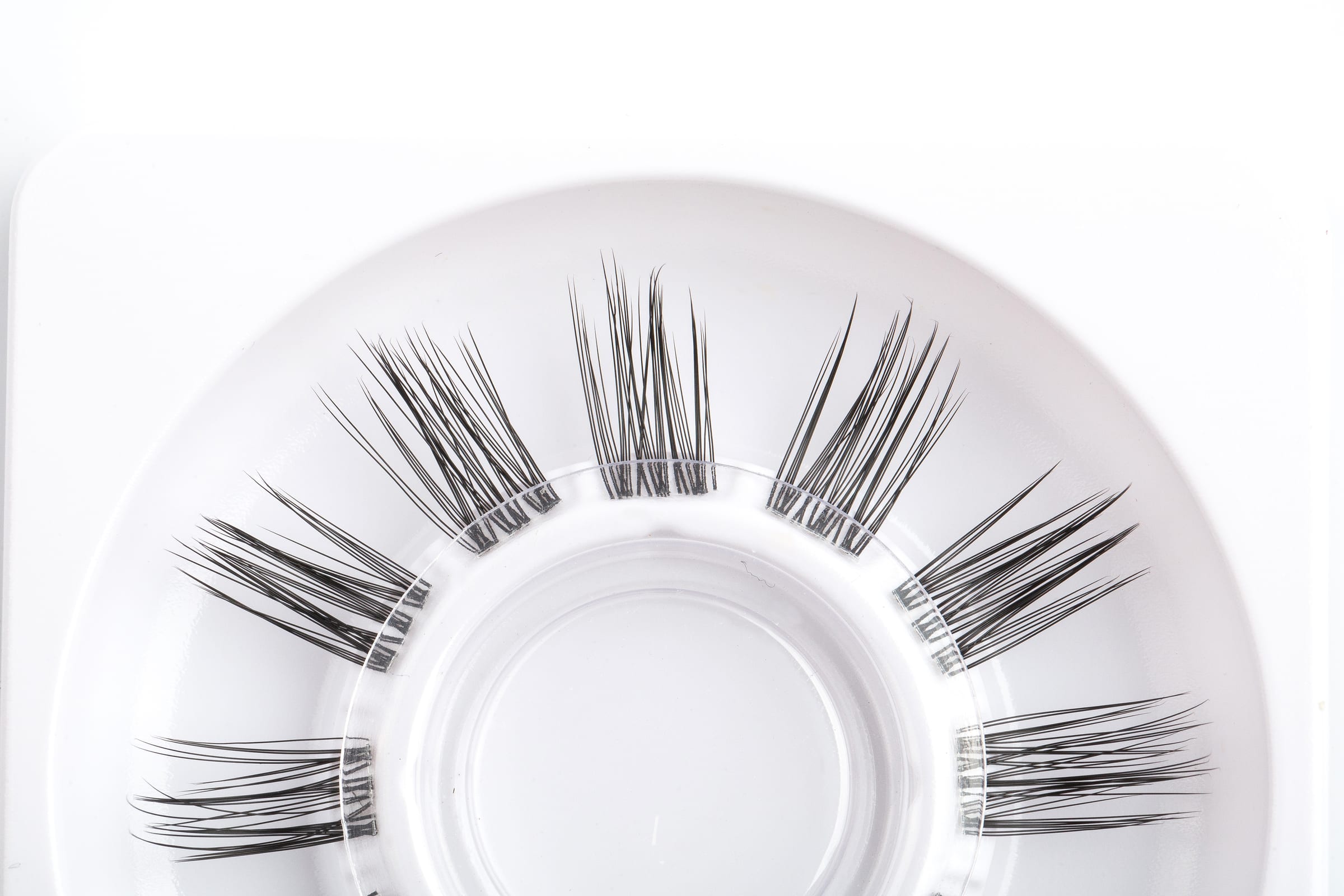
Development visualization · approve adhesive bases and tray by physical sample.
READY-TO-APPLY DEVELOPMENT ROUTE
Pre-Glued Lash Clusters for Private-Label Ranges
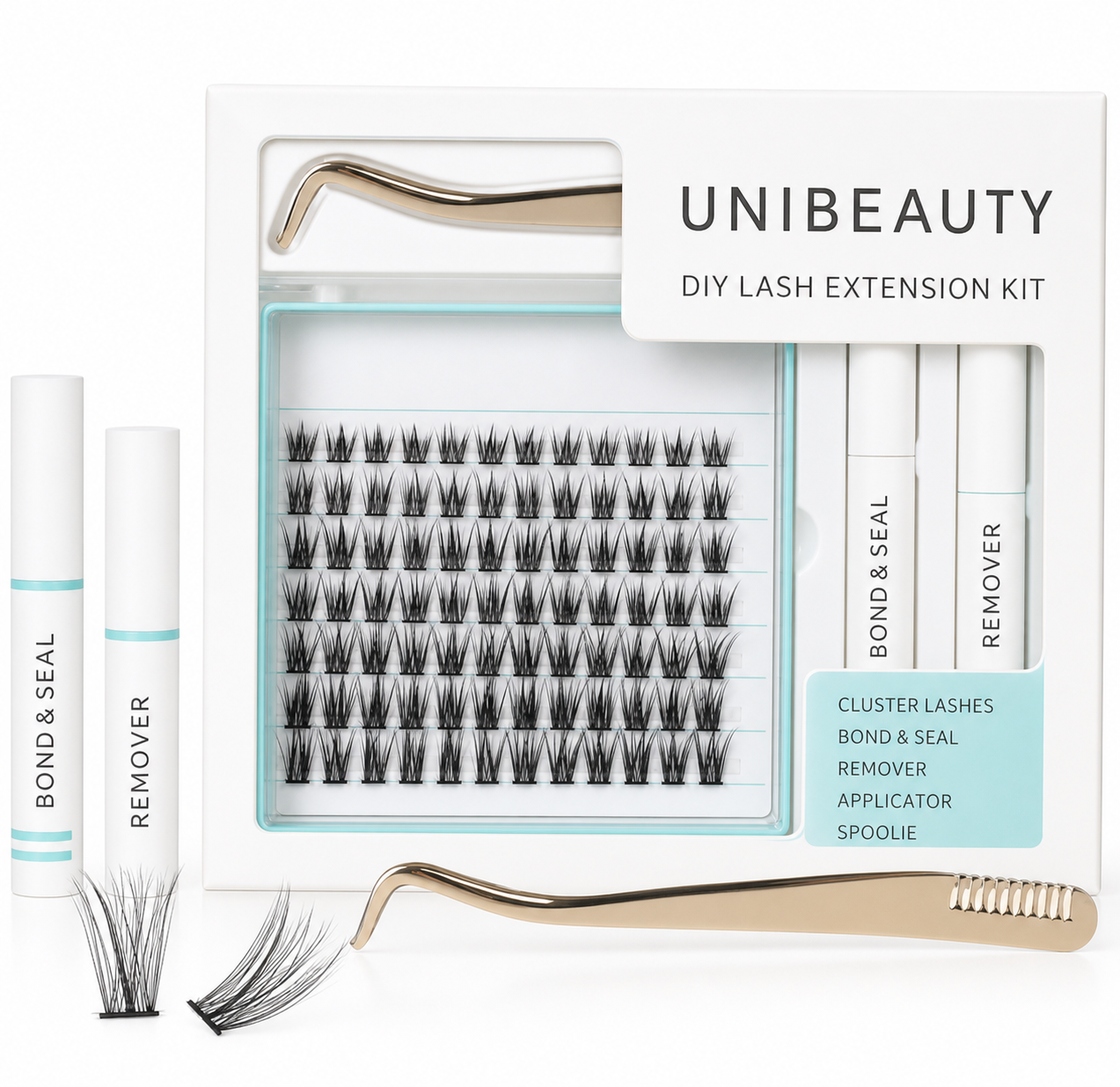
Develop pre-glued lash clusters with pre-applied adhesive cushions, a protective release tray and selected length maps. Review pickup and the physical sample.
Develop wholesale or private-label pre-glued lash clusters with a W-shaped, single or double adhesive-strip layout. Specify the supporting single-band or double-band lash base separately, then confirm the selected style, length map and protective release tray before sample production.
PRODUCT EVIDENCE
Pre-glued lash cluster specifications and sample checks
- Visible pre-applied adhesive cushions
- Single or mixed-length cluster map
- Protective release tray
- Pickup tool and instructions
- Density
- Length progression
- Adhesive-cushion presentation
- Tray and applicator
- Adhesive-base consistency
- Clean release
- Fiber alignment
- Tray protection
Exact MOQ, lead time, formula behavior, certification, capacity and destination documents are confirmed against the selected physical product and project brief.
W-SHAPED ADHESIVE · PRIVATE-LABEL LASH CLUSTERS
What makes our W-shaped adhesive band different?
Our W-shaped adhesive band is designed to broaden the adhesive contact area and improve fit along the lash line. For wholesale pre-glued lash clusters, develop the adhesive layout, lash-band support and selected density as one product.
Pre-glued, self-adhesive or no-glue clusters?
Pre-glued or self-adhesive clusters have pressure-sensitive adhesive at the segment base, protected by a release tray until pickup. If your sourcing reference says “no-glue cluster lashes”, confirm whether this means no separately applied bond; it does not mean the product contains no adhesive. Keep the chosen product’s application and removal instructions with its approved component list.
If your market reference is described as press-on lashes, confirm whether you need separate pre-glued segments or one shorter fixed strip. The format determines the product brief; confirm the chosen construction on the physical sample.
Single-band or double-band lash base? The lash band supports the fibers; the glue strip provides the pre-applied adhesive. Both single-band and double-band styles can be developed as pre-glued products. A single-band base is a usual starting point for lighter, natural-looking styles. For a fuller style, review the required band support alongside adhesive stretch and thickness during sampling.
| Adhesive layout | Structural difference | What to compare in your sample |
|---|---|---|
| Single glue strip | One continuous adhesive line. | Review the line position, contact and release with the chosen lash style and supporting band. |
| Double glue strip | Two separate adhesive lines with a gap between them. | Review both lines, their spacing and tray release. Two glue lines and a double-band lash base are separate specifications. |
| W-shaped glue strip | A shaped adhesive path developed to broaden the contact footprint and improve fit. | Compare contact, placement and lifting with the selected style. Match the W-shaped layout to its lash-band support and protective tray. |
Develop your own pre-glued range. Send a reference image, physical sample or the style you want to develop. We confirm the lash style, band, adhesive layout and specifications, then arrange sample production. Packaging layout and logo-print approval follow during bulk-order preparation.
Sample checks for the complete adhesive and lash-band system
- Adhesive layout and lash band
- Specify the single, double or W-shaped adhesive layout separately from the single-band or double-band lash base. Check adhesive placement, contact and band integrity on the selected sample.
- Density, adhesive and support
- Review adhesive viscosity, stretch and thickness together with lash density and band support. Compare lifting, shifting and deformation during the agreed application and removal checks.
- Tray release and pickup
- Review release from the protective tray, tool access and whether the base remains intact.
- Storage and shipment
- Agree packaging, storage conditions and the checks needed after transport or environmental exposure.
- Instructions and documentation
- Match application, removal, labeling and applicable SDS/MSDS to the quoted adhesive system.
- Claims and sample approval
- Define the test method and conditions before agreeing any wear or performance claim; record the approved sample and version.
For pickup and placement, compare coated non-stick lash tweezers for pre-glued clusters with your selected adhesive and release tray. Review residue and release before adding the tool to your kit.
The W-shaped layout describes a design approach; wear duration, holding strength and reuse depend on the selected product and validation conditions. Use the records for the exact material and product. An SDS/MSDS describes the identified chemical system; it is not a certification of wear performance or suitability for every market.
Send your pre-glued sample requirements →UNIBEAUTY · TECHNICAL DEVELOPMENT REFERENCES
Pre-glued lash clusters: adhesive color, width and thickness
Use these self-adhesive cluster references to describe the visible adhesive profile. Develop the adhesive, supporting lash base and release arrangement together for the selected style.

Compare the visible clear and black adhesive details; confirm the quoted adhesive system separately.
Enlarge technical reference →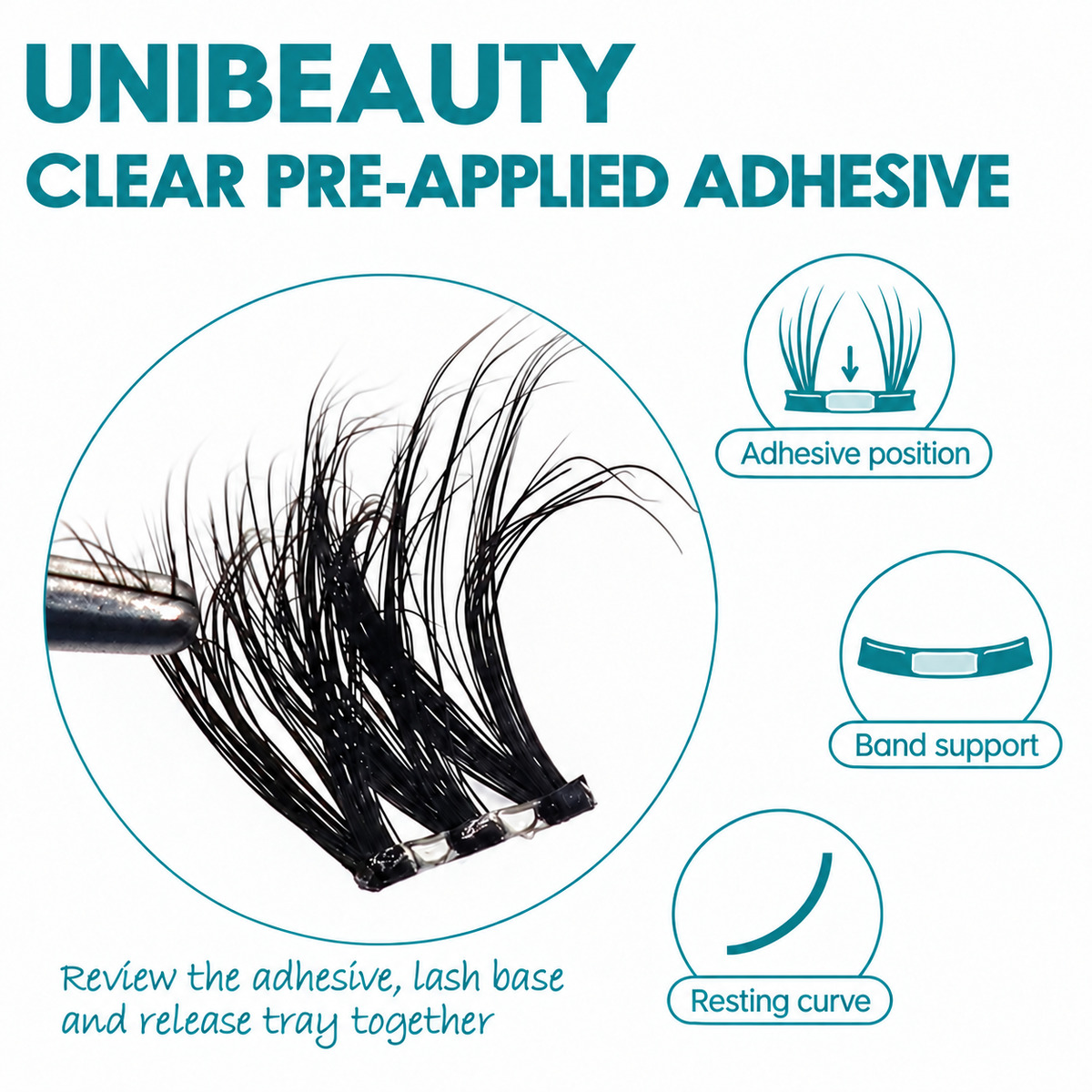
Clear-adhesive detail: specify coverage, width, thickness and position against the selected physical sample.
Enlarge technical reference →- Appearance and dimensions
- Record adhesive color, width, thickness and position. A clear appearance describes visibility; it does not identify the formula or establish equivalence to another adhesive.
- Adhesive path and supporting band
- Specify single-band or double-band fiber support separately from single, double or W-shaped glue-strip layouts. Match both selections to the intended cluster construction.
- Release and protection
- Review the release tray, tool access and anti-stick protection together. Check base shape, visible residue and adhesive transfer during the agreed sample pickup review.
Artwork adapted with AI-assisted text and branding edits from supplied technical references; final construction is confirmed by physical sample.
UNIBEAUTY · TECHNICAL DEVELOPMENT REFERENCES
Pre-glued cluster pickup: grip position and release surface
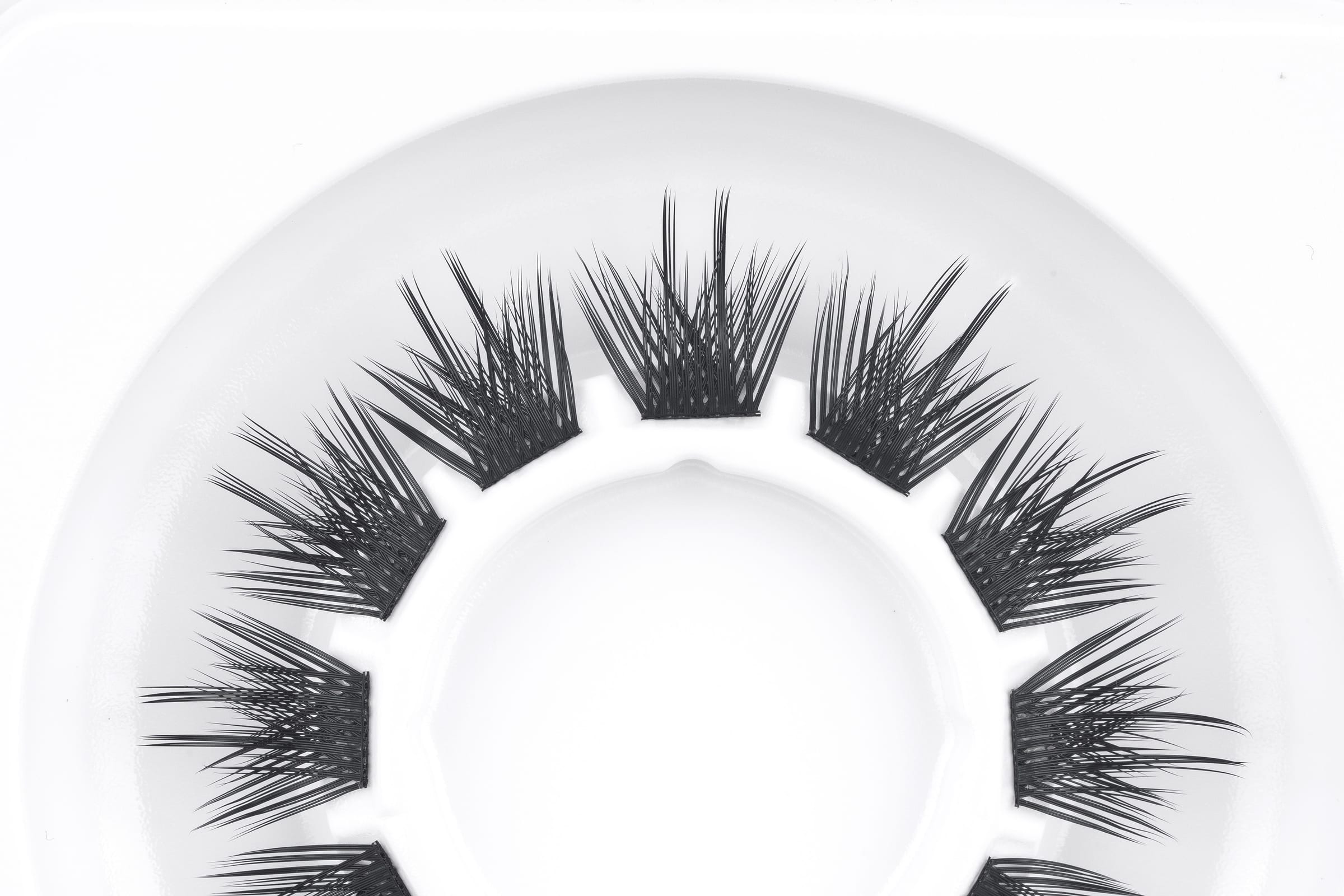
Develop the pickup detail around the selected cluster, adhesive layer and release surface. Use the technical reference to agree where the applicator contacts the product and what to inspect after tray release.

Pickup and release reference: distinguish the gripping area, adhesive layer and release surface before reviewing the physical sample.
Enlarge technical reference →- Applicator contact area
- Identify the intended gripping area on the chosen cluster. Review tool access and contact with the fibers, supporting base and adhesive using the applicator selected for that product.
- Adhesive layer and release surface
- Identify the adhesive coating and the surface that carries it in the tray as separate components. Agree the release arrangement and check visible adhesive transfer during sample review.
- Base shape after release
- Inspect the exposed adhesive coverage, remaining release material and cluster base outline after pickup. Retain the approved tray, adhesive and applicator combination in the product specification.
Artwork adapted with AI-assisted text and branding edits from supplied technical references; final construction is confirmed by physical sample.
RELATED SOURCING OPTIONS
Compare products and plan the next component.
PRODUCT-MATCHED TECHNICAL INFORMATION
Request the records for the product you are developing.
Our product library includes PBT material, adhesive, sealant, pre-glued, cleanser and remover documentation. We select the applicable records by product, formula or material version and production scope—not by the category name alone.
Send the product, target market and required ingredient or material specification. We review the applicable SDS/MSDS, composition information, batch or test records, packaging and instructions for that selected project.
An SDS/MSDS is chemical information, not a wear-performance certificate or a blanket approval for every product. Factory qualification documents and product reports must match their named holder, site, sample, scope and date. Confidential formulas and original internal files are not public downloads.
Discuss the technical information for your project →START A FACTORY-DIRECT PROJECT
500 boxes total. Mix your styles.
Not 500 boxes per style.
Bring product images, packaging designs or your development brief. We customize products, outer packaging and complete kits, including new mold and tooling development for approved designs. The lash starting MOQ is 500 boxes combined across styles; separate custom components and tooling are confirmed for the project.