Record the evidence before interpreting it
Each reference should keep four facts together: source brand, normalized official page or launch time, exact style and official link. Page publication time is not automatically the first retail day. A live listing, review count or sold-out badge is context, not proof of sell-through or bestseller status.
- Source brand
- Official launch or page time
- Exact reference style
- Official product URL
Translate the signal through three buyer questions
A reference is not a recommendation by itself. We ask what the consumer experiences, how the direction connects to the client's current range and which commercial role it could play. This keeps competitor names in the evidence area and gives the new product a brand-owned working title.
- Consumer perspective
- Connection to the current range
- Commercial role
Keep one product-form lane
A pre-glued half lash, a self-adhesive multipack, a brown ombré strip, an activity-positioned lash and an eyeliner kit show different commercial systems. They should not be blended into one vague trend. Each signal becomes a separate product-form hypothesis with its own use case and sample controls.
Turn uncertainty into a sample decision
Official pages rarely reveal every production variable. Missing details should become an open question: band visibility, adhesive protection, root profile, shade transition, kit count or application sequence. The sample brief then states what to compare and what would make the direction suitable for the client's buyer.
- Visible attribute to test
- Reference attribute to avoid copying
- Application or packaging control
- Approval condition
Use retail evidence as an input, not a guarantee
The method supports product judgment; it does not promise sales. A stronger decision combines traceable retail evidence with the client's own sales data, customer feedback, price architecture, channel requirements and physical sample results.
Major-brand retail sell-through advantage information reference
Observed 24 August 2026. These official pages are used as traceable product signals, not as unsupported proof of sales rank or demand.
- Brand
- Tatti Lashes
- Launch or page time
- 30 January 2026 (official page publication time)
- Style
- Kika Pre-Glued Half Lashes
Convenience-led half-lash format with a structured wing. Useful for a pre-glued format hypothesis; review count is not sales-volume evidence.
Open official product page ↗- Brand
- Ardell
- Launch or page time
- 12 June 2026 (official page publication time)
- Style
- Self-Adhesive 105, 4-Pack
Self-adhesive multipack architecture. Useful for testing replenishment or value-pack roles; the listing alone does not prove sell-through.
Open official product page ↗- Brand
- Tatti Lashes
- Launch or page time
- 22 November 2024 (official page publication time)
- Style
- Ombre Medium To Dark Chocolate
Brown gradient direction with continued assortment presence. A current NEW badge is not treated as proof of a recent launch.
Open official product page ↗- Brand
- Ardell
- Launch or page time
- 27 December 2024 (official page publication time)
- Style
- Active Lash Speedy
Performance and occasion-led positioning. Useful for a wear-context brief; the official page does not establish bestseller status.
Open official product page ↗- Brand
- Glam by Manicare
- Launch or page time
- 25 November 2024 (official page publication time)
- Style
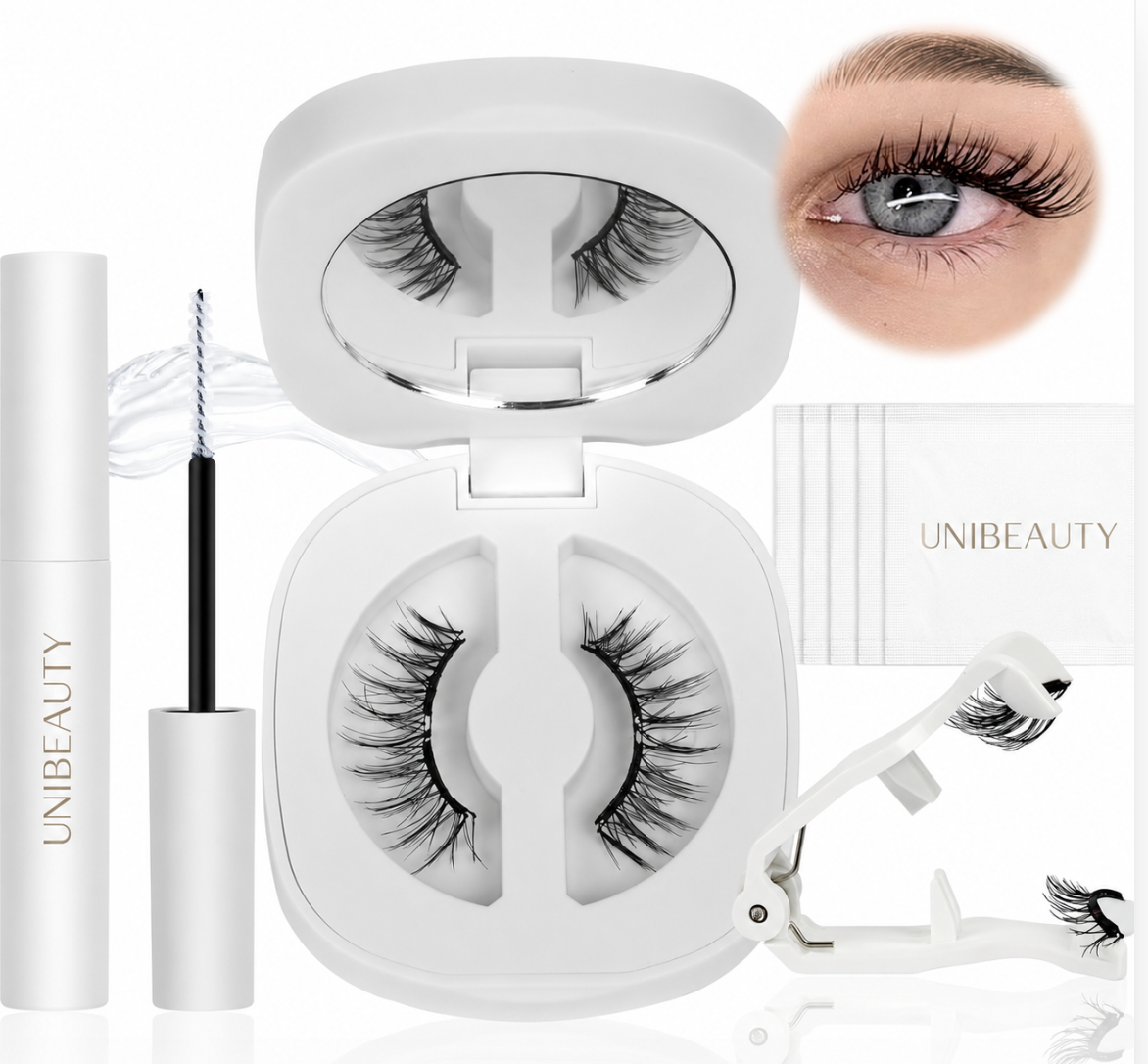
- Ruby Grace Glam Xpress Adhesive Eyeliner & Lash Kit
Eyeliner-and-lash kit architecture. Stock status is recorded only as page context, not as proof of demand cause.
Open official product page ↗Buyer questions
Does a sold-out lash product prove strong sell-through?
No. Sold-out status can have several causes. It should be recorded as page context unless product-level sales, inventory and time-period evidence is available.
Why record page time separately from launch time?
A product page's publication timestamp may not equal the first retail date. Labeling it accurately prevents a page timestamp from becoming an unsupported launch claim.
How does UNIBEAUTY use competitor references?
References define product principles and test questions. Protected brand identity is not copied, and exact competitor style names remain in the evidence record rather than becoming recommendation titles.